If you're new here, you may want to subscribe to my RSS feed. Thanks for visiting!
Acorn Woodpecker Juvenile Female photos by Larry Jordan
I haven’t been able to do much birding lately. I’m in the process of switching over from a PC to a Mac (anyone with advice on doing this please chime in). Since I have this lovely Labor Day weekend, completely free of my regular job duties, I thought I would just enjoy the birds in my own backyard.
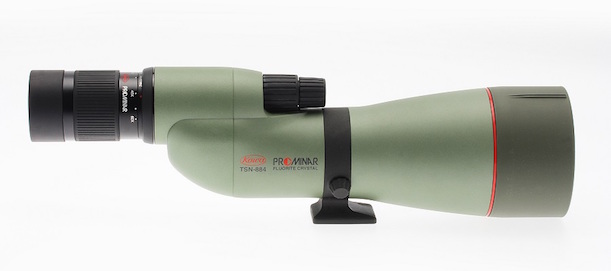
I sat on my porch with my digiscoping setup and had fun watching the birds and other animals as they went about their daily routines. These images were all taken with the setup mentioned above but with a fixed 30x eyepiece. Click on photos for larger size images.
The Acorn Woodpeckers were very active, bringing their young to the woodpecker feeder. The juvenile female (above) was at the waterfall getting a drink. Note the sparse red on the crown. Male and female juveniles of this species both have solid red crowns similar to the adult male before going through their prebasic molt in the fall. They also begin life with blue eyes that slowly turn to the white or gold color of the adult. You can see her eyes are very pale and the red is disappearing from her crown.
Here is a photo of an adult female Acorn Woodpecker. The red crown is separated from the white forehead by a wide black band and her eyes are a light gold color.
Near the feeder was a juvenile male posing nicely in the morning sun with pale blue eyes and his red crown beginning at his white forehead and extending to the nape.
At one point he got excited at all the commotion around him and raised his crown momentarily
I think the Western Gray Squirrel running amok in the tree was the cause.
The Western Scrub-Jays and Mourning Doves were scavenging on the ground for fallen seeds, the scrub-jays filling up their beaks as usual
and the doves feeding in the shade of the oak trees
There were many animals and birds visiting the pond. The squirrels, jackrabbits, and deer, California Quail and Anna’s Hummingbird. Here are a few I photographed, starting with one of my favorite cavity nesting birds, the Oak Titmouse
and the ever present Lesser Goldfinch.
I hope you enjoyed the portraits from my porch. All these birds are year round residents here and I am lucky to be able to watch them interact with one another throughout the seasons.
Here is one last look at the young female Acorn Woodpecker drinking from the waterfall, a taste of red, white and blue for Labor Day.
To see more bird photography from around the world, check out Bird Photography Weekly and join in the fun!
I was finally able to see the movie “The Cove” tonight on Animal Planet. It is both tragic and inspiring. I am not going to bother reviewing the film. I will simply say see it! You will never go to a Sea World or other dolphin show again.
A new series “Blood Dolphins” begins Friday, September 3rd and then the following Friday, September 10th at 9 pm on Animal Planet.
The Cove will be repeated on Planet Green Network, Monday August 30th at 6 and 9 pm and Saturday, September 4th at 7 and 10 pm.
If you care about these beautiful mammals, possibly more intelligent than humans, don’t miss this chance to see what is happening to them and what we can do about it.
For more information and to take action to help save the dolphins, go to SaveJapanDolphins.org
Following the episode at Turtle Bay when I found the Belted Kingfisher and watched the Green Heron preening, I decided to revisit that location, a few days later, in another attempt at photographing the kingfisher or Common Mergansers I had seen. I have spotted Belted Kingfishers nearly every visit to Turtle Bay so I am reasonably sure there is at least one pair that live there year round.
Not having but an hour or so to find my bounty, I spotted a small flock of female mergansers from the bridge upon my arrival and made my way down to the shore where they were relaxing with a group of Canada Geese (click on photos to see the full sized image).
I counted a baker’s dozen of these beautiful redheaded females, some sleeping
while others were fishing nearby from the water’s surface and diving.
Common Mergansers are a visual pursuit predator, with a slender and serrated bill for grasping prey, primarily small fish, but also aquatic invertebrates (insects, mollusks, crustaceans, worms), frogs, small mammals, birds, and plants. They forage in bouts of dives separated by inter-dive pauses and probe sediments and underwater stones for prey1.
When at the surface, they swim forward with their head underwater searching for or chasing prey then submerge to capture the item. In shallow water they return to the surface to swallow prey, in deeper water they may swallow fish while still submerged, typically with neck outstretched. Migrating and wintering flocks of hundreds of birds may forage cooperatively by forming a loose line and driving fish ahead of them1.
The following video shows a female Common Merganser with her brood fishing from the surface and diving for food.
Most of the birds were frolicking and bathing in the water, followed by preening
sometimes followed by vigorous wing flapping
This bird appears to be molting, growing out new flight feathers. It is very possible that this flock of mergansers could be adults with their juvenile offspring.
It sure was fun watching them fishing, diving, playing and preening.
As I was preparing to leave, out of the corner of my eye, I saw a bluish-gray bird with a lot of white flashing. I only saw it for an instant as it flew across in front of me and was immediately hidden behind a tree. It was headed for the other side of the river. I think it was a Belted Kingfisher, teasing me.
Until next time, drop by Birdfreak and check out all the great photos at Bird Photography Weekly.
Seattle, WA – Millions of Canada’s migratory birds, representing more than a hundred species, could be at risk when they return this fall to areas in the Gulf of Mexico affected by the oil spill. The Gulf Coast serves as important habitat for hundreds of Canada’s bird species which use the region for wintering grounds and migratory stopover habitat.
“The world’s largest migration occurs every year when billions of birds fly from Canada to areas south, including the Gulf Coast,” said Dr. Jeff Wells, senior scientist at the Boreal Songbird Initiative. “We’re not sure what these birds will face when they return to areas hit by the oil spill, but certainly a large number of birds could be vulnerable to illness or even death.”
The migratory birds of Canada’s Boreal Forest represent a significant percentage of the birds that winter in the Gulf Coast region or stop during their travels further south. Canada’s Boreal Forest is the world’s largest intact forest and is home to more than 300 bird species, including 80 percent of North American waterfowl species, 63 percent of finches and 53 percent of warblers.
“There’s been a lot of attention to oil spill effects on local resident species,” said Wells. “But there’s a lurking time bomb for many waterfowl and shorebirds that breed in Canada’s Boreal Forest and winter or stop in the Gulf.”
Nearly 5 billion of Canada’s migratory birds fly south every fall, Wells adds. He and other experts worry these birds could face both long- and short-term adverse effects to shoreline habitat, necessary winter food sources and health.
The Gulf Coast is vitally important for many wetland bird species. The marshes, beaches and tidal flats provide ideal nesting areas and habitat for millions of waterfowl, seabirds, shorebirds and other water birds. These habitats also house fish, mollusks and other marine life that provide the food supply for many of these birds. The impact on smaller food sources like plankton could have a ripple effect on the entire food chain. There may also be longer-term effects stemming from physiological impacts of ingested oil that could lead to lower breeding success rates.
Currently, nesting birds such as terns, gulls and pelicans are hit hardest by the oil spill. Louisiana’s coast supports an estimated 77 percent of the U.S. breeding population of Sandwich Tern, 52 percent of Forster’s Tern and 44 percent of black skimmer. Many of North America’s most at-risk species also live in the region during a portion of the year, including Yellow Rail, Black Rail, Snowy Plover, Piping Plover, and Short-billed Dowitcher. The oil spill could pose long-term implications for the health of their total populations.
“We’ve really only seen the tip of the iceberg so far,” said Wells. “Species from the Boreal and other areas may encounter habitats and food sources contaminated with oil on their journey south that may cause illness or even mortality. These birds, and the generations to come after them, are endangered by the oil spill’s impact to critical marsh and beach habitat.”
While there isn’t much that can be done to mitigate effects of the oil spill on wildlife, he adds, there are ways to protect bird populations in the future through prevention of habitat loss and fragmentation—one of the leading causes of declining bird populations worldwide.
“By protecting intact ecosystems such as the 1.4 billion acres of Canada’s Boreal Forest,” said Wells, “we can give these critical populations of migratory birds a fighting chance of recovering from devastating occurrences such as the Gulf oil spill.”
The following video is an informational piece from Ducks Unlimited.
Dr. Jeff Wells is the Science and Policy Director for the Boreal Songbird Initiative (BSI). BSI is a non-profit organization dedicated to outreach and education about the importance of Canada’s Boreal Forest to North America’s birds.
Mourning Dove Drinking from the Sacramento River photos by Larry Jordan
I was fortunate to get off work a little early the other day and decided to stop by Turtle Bay and see what avian fauna was about. It was near 100 degrees, in the late afternoon so I didn’t expect much. I walked across the bridge to the East side of the Sacramento River and positioned myself in the shade to try and catch some Common Mergansers that were feeding along the shore.
The Mourning Dove flew down from a tree above my head to get a drink from the river, shortly after a North American River Otter cruised by.
All of a sudden the distinctive sound of a Belted Kingfisher crackled through the air. Audio courtesy of Robin Carter (XC1363).
Audio clip: Adobe Flash Player (version 9 or above) is required to play this audio clip. Download the latest version here. You also need to have JavaScript enabled in your browser.
Some of you may know that I have been trying to photograph one of these amazing birds for quite some time. This photo doesn’t do her justice.
She stayed in the shadows of an inlet near the bridge, fishing. I tried to follow her but she slipped by me. So I headed back toward the river and waited.
As I tried to find a place on the steep bank for my tripod, I flushed a Green Heron that was so well hidden, I didn’t even notice it. I searched for its new location back up the inlet where the Belted Kingfisher, and a Great Egret also, had been fishing. A bright golden eye gave it away.
I watched this excellent fisher make a catch and swallow it down before I could focus my lens. Then, to my surprise and increasing excitement, it flew to a perch directly across from me and began preening.
I just watched as he or she arranged all feathers into their proper places.